
How to Choose a Sandwich Franchise: 5 Things to Look For
It’s one of the most familiar formats in American franchising. Call it a hoagie, a sub, or a hero, and nearly every town has a sandwich shop on the corner. That familiarity is exactly why choosing a sandwich franchise takes a sharper eye. From the curb, plenty of brands look alike. Behind the counter, they differ in product, supply chain, footprint, and support, and those differences show up in the numbers.
This guide is for operators weighing a sandwich franchise as their next investment. It covers where the sandwich category stands today and the five tests that separate a strong concept from the rest of the field.
What Does the Sandwich Category Look Like for Franchise Buyers in 2026?
Sandwiches are one of the most established categories in American restaurants. The U.S. sandwich and sub restaurant industry was valued at $42 billion in 2026, with revenue growing an average of 2.4% a year over the last five years.
Sandwich shops also have real advantages for owners. Most run on a short equipment list and a simple prep line, and many build a steady catering business on top of walk-in traffic. That keeps labor and buildout costs manageable.
Customer tastes are moving in a direction that favors premium sandwich concepts. The International Franchise Association’s 2026 Franchising Economic Outlook found that quick service diners are leaning toward “experiential dining” and away from choosing on price alone. For sandwich brands, that rewards a product people will go out of their way for. That’s where PrimoHoagies has competed since 1992, with hoagies built on hand-rolled seeded bread, proprietary meats, and family recipes.
What Separates a Strong Sandwich Franchise Concept?
Strong sandwich concepts tend to pass the same five tests. Use them to compare any brand on your list.
1. A Product Competitors Can’t Replicate
Most sandwich menus look alike on paper. The difference shows up in the bread, the meats and the supply chain behind them. Ask what is proprietary, who produces it, and whether a national chain could match it by next quarter. A brand that wins on ingredients has room to hold its price. A brand that wins only on convenience usually ends up competing on discounts.
2. Unit Economics You Can Verify in the FDD
Strong unit economics start with how much a restaurant sells compared with what it costs to open. In a sandwich concept, look for healthy average sales against a moderate initial investment and for consistency across the system. If the median unit sits close to the average and a good share of units beat it, the results aren’t being carried by a few standouts. Then look at what protects margin. A focused menu and a simple prep line keep food waste and labor in check, a smaller footprint keeps rent down, and catering adds sales without adding seats.
3. A Footprint That Keeps Buildout Costs in Check
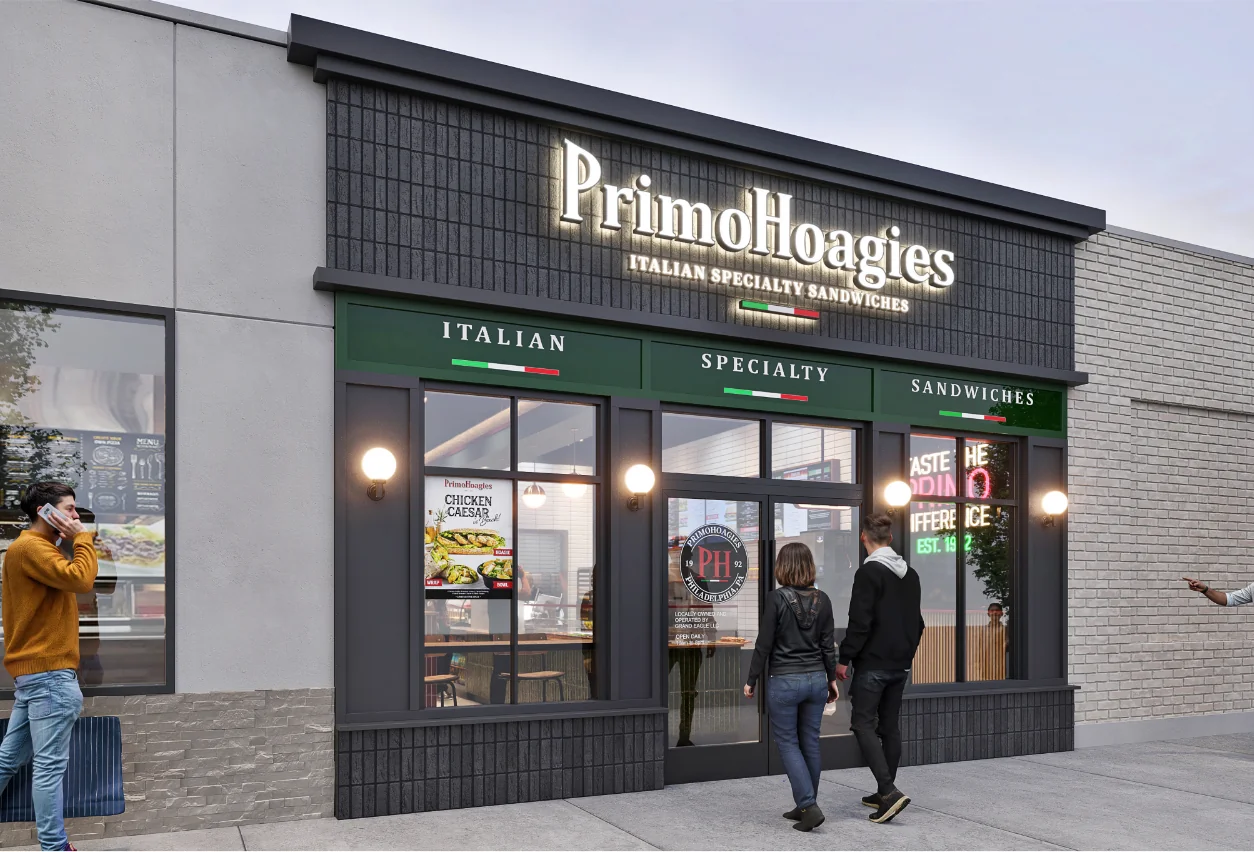
Real estate and construction are among the biggest variables in any restaurant investment. Smaller formats that skip hoods and fryers can fit more sites, lower buildout costs, and shorten the time to open. Ask for the prototype square footage and the equipment package it requires. PrimoHoagies’ new prototypes target 1,000 to 1,200 square feet with no hoods or fryers, which opens up more real estate options and keeps buildouts lean.
4. Territory You Can Actually Build In
A strong brand with no room left in your market will not set you up for long-term growth. Ask which markets are open, how territories are defined, and whether the franchisor offers multi-unit development terms. Successful single-unit franchisees are increasingly reinvesting in additional locations, so a real runway for growth matters from the first unit.
5. Franchise Support That Lasts Past Grand Opening
Training and real estate support help get a restaurant open, but field support is what keeps you growing in year three. The FTC’s Consumer’s Guide to Buying a Franchise recommends speaking with current and former franchisees, whose contact information appears in Item 20 of the FDD. Ask them what support looked like after the ribbon cutting.
How PrimoHoagies Measures Up
PrimoHoagies opened as a single South Philadelphia deli in 1992 and has grown to more than 120 locations. USA Today named PrimoHoagies “Best Sandwich Shop” three consecutive years. Here is how we line up against other concepts in the category:
- Product: Family recipes built on our hand-rolled seeded bread, proprietary meats and gourmet cheeses, backed by a proprietary supply chain.
- Unit economics: A systemwide AUV of $927K*, with top-quartile units averaging $1.35M*. Initial investment starts at $367K**.
- Footprint: New prototypes target 1,000 to 1,200 square feet with no hoods or fryers.
- Territory: Open markets from the Carolinas up through New England, with multi-unit development discounts available.
- Support: Training in our company restaurants, hands-on help from our development team with real estate and construction, and operational support that continues well after your first grand opening.
PrimoHoagies was founded on Italian heritage, but the numbers are what draw serious operators to the table. If you have at least $500K in liquid capital and $1M in net worth, see if you qualify and start a conversation with our franchise development team.